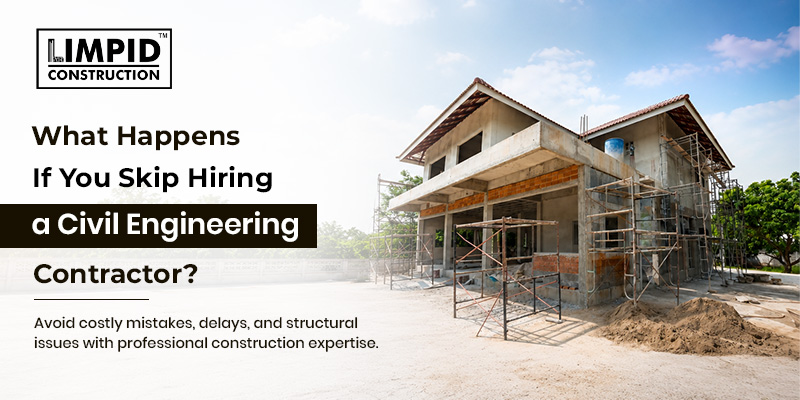
If you skip a civil engineering contractor, you risk your project failing structurally, getting into legal trouble, and blowing its budget, which will be much more expensive to repair than the savings you get from not hiring them. This is exactly why hiring civil engineering contractors in Indore is a decision worth taking seriously. Skipping that step can be one of the most expensive mistakes.
So what really happens when you decide to go it alone? Let’s find out.
Table of Content
- What Problems Can Occur If You Build Without a Civil Engineering Contractor?
- Can I Manage a Construction Project Without a Civil Engineer?
- What Are the Legal Risks of Not Hiring Civil Engineering Contractors in Indore?
- How Does Skipping a Civil Contractor Affect Construction Quality and Safety?
- What Is the Cost of Fixing Mistakes Made Without a Civil Engineering Contractor?
What Problems Can Occur If You Build Without a Civil Engineering Contractor?
A construction project without a civil engineering contractor rarely goes as smoothly as planned. Across residential and commercial construction projects in Indore, these issues come up frequently.
- Foundations Without Soil Testing: Ground conditions vary even within the same street. Without a soil test, foundations settle unevenly, and walls start cracking before the building is a few years old.
- Drainage Slopes Gone Wrong: A slope may look good on paper, but can actually direct water toward the building rather than away from it, leading to seepage and long-term damage to the foundation.
- Inaccurate Material Estimation: Ordering too much or running out of materials halfway through a project because you didn’t do the math correctly costs money and delays schedules.
- Structural Walls Without Load Calculations: A wall can look solid and still be carrying more than it should. The risk builds quietly until it becomes visible, usually at the worst possible time.
- Utility Lines Cut During Excavation: If you skip the underground survey, you might well cut a water line or electrical conduit in the middle of a dig, turning a simple excavation into an expensive repair job.
Can I Manage a Construction Project Without a Civil Engineer?
Managing a construction project without a civil engineer is possible. Getting it right without one is much harder. A general contractor can manage workers and keep work moving, but verifying whether the structure is safe or the plan meets legal requirements is a different skill set entirely. Without a civil engineer, those checks simply do not happen, and that missing step will catch up with the project sooner or later.
What Are the Legal Risks of Not Hiring Civil Engineering Contractors in Indore?
Without certified engineering oversight, approvals can be refused, occupancy certificates denied, and in the worst cases, demolition notices served. Most construction projects require a sign-off from a qualified engineer on plans and site inspections as part of building codes.
Even an infrastructure development company in Indore has to stay on top of this. Skipping that oversight at any scale carries serious legal consequences, and local authorities require documentation as part of standard building code compliance.
Read Next: Why Checklists Are Important During Construction Works?
How Does Skipping a Civil Contractor Affect Construction Quality and Safety?
Skipping a civil contractor will cost you safety oversight on site and lead to quality issues that only surface once the project’s complete and are hard to fix. That’s why hiring building construction services in Indore is important.
- Substandard Concrete Mixes: No engineering specs usually means concrete mixed by feel, not by the strength grade the structure actually needs. That shortcut shows up years later as a durability problem.
- Structural Joints That Shift Under Load: Joints that aren’t designed correctly don’t stand still. They move under normal use, and you end up with cracking, misalignment, and sometimes partial failure.
- Uneven Roofing and Slab Levels: A small levelling error may not seem like much, but it’s enough to prevent water from draining properly. Pooling water on slabs and terraces speeds up wear and tear.
- Uncoordinated Plumbing and Electrical Runs: Without a planned layout, pipes and conduits run straight into beams and columns. That’s not a small fix either; it usually means tearing into finished work.
What Is the Cost of Fixing Mistakes Made Without a Civil Engineering Contractor?
Repair costs almost always beat the engineering fee you skipped. Fixing a bad foundation, redoing drainage, and waterproofing a basement that leaked because it was never sealed, none of it comes cheap.
The real sting is that these fixes do not just cost money. They cost time, peace of mind, and sometimes the safety of the people in that building. Skipping a civil engineer to save upfront costs looks reasonable at first and painful later.
To Sum Up
Every crack, flooded basement, and rejected permit comes back to one thing: no expertise at the start. Civil engineering contractors aren’t an expense. They’re what keep your building standing, compliant, and worth what you spent. Reach out to Limpid Construction before execution begins. The right expertise up front protects your timeline, budget, and structure.
Next up: Another cost decision every property owner in Indore gets wrong before construction even starts. Stay tuned.
Frequently Asked Questions
-
Is hiring a civil engineering contractor necessary for small residential projects, too, or just large ones?
People think small projects don’t need a civil engineer, but that’s not true. Even a small house needs soil testing, load calculations, and drainage planning. Skipping the engineer will only lead to cracks and problems later.
-
How can I verify that a contractor is actually working with a certified civil engineer on my project?
Ask for structural drawings with the engineer’s stamp and registration number, and ask who signs off on site inspections. If they can’t produce that, that’s your answer.
-
What’s the real difference between a general contractor and a civil engineering contractor?
A general contractor manages labour and timelines. A civil engineer verifies that the structure is safe and meets code. You need both, not one in place of the other.