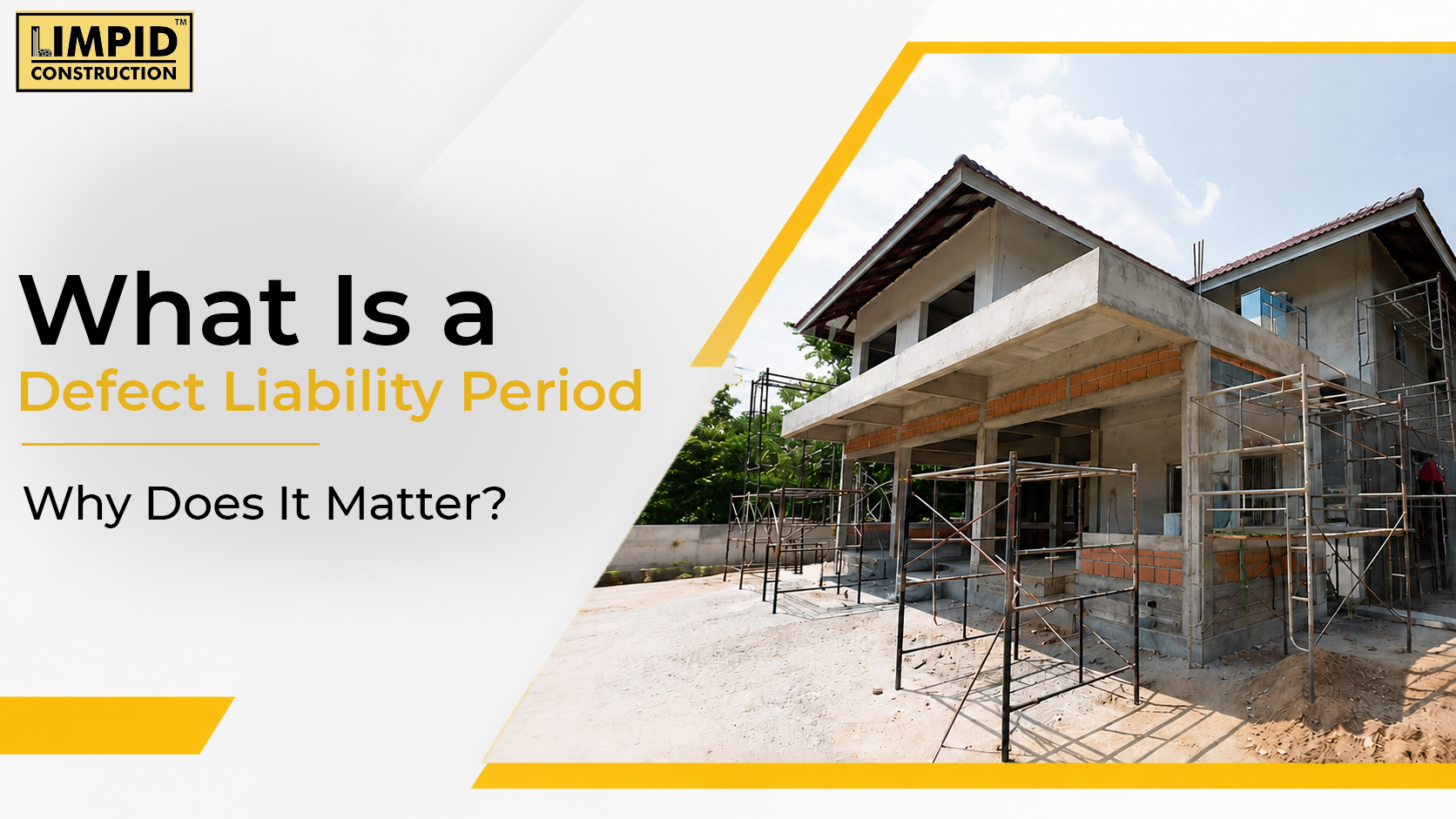
Buying a new home is exciting. But a few months in, things start showing up, like a crack near the window, tiles that feel slightly off underfoot, fittings not working anymore. Most people call the builder and get no reply. What they don’t know is that the builder is still legally responsible for fixing this. That’s what the Defect Liability Period is. The best construction company in Indore will sort these issues out without you having to chase them down.
Table of Contents
- What Does Defect Liability Period Mean in Construction?
- How Long Does the Defect Liability Period Last?
- What Defects Are Covered by Builders After Construction Is Complete?
- How to Claim Defect Repairs From a Construction Company in Indore?
- What Happens When a Builder Does Not Fix Defects After Handover?
What Does Defect Liability Period Mean in Construction?
The Defect Liability Period, or DLP, is a fixed window after you move in during which the builder is still legally on the hook for any defects in their work, at no extra cost to you. Basically, a warranty for your home, covering bad artistry, cheap materials and anything built wrong. Here is what the DLP typically covers:
- Cracks in walls, ceilings, or floors from poor construction or settling.
- Plumbing leaks that have nothing to do with how you used them.
- Electrical problems traced back to bad installation.
- Doors, windows, or fittings that just don’t work right.
- Seepage or waterproofing that gave out too soon.
Note: Wear and tear, damage you caused, or anything from a flood or storm is not covered.
How Long Does the Defect Liability Period Last?
RERA Section 14(3) sets this at five years for residential properties. The clock starts from the date of possession as stated in the possession certificate. Any defect reported within this window must be fixed free of charge within 30 days. This specifically covers structural and artistic defects. Limpid also offers a 1.5-year artistry warranty covering issues beyond RERA’s structural defect definition.
Before RERA, it was two years, which wasn’t enough. Some defects, like a roof that only leaks during heavy monsoon rains, can take two or three seasons even to show up. For non-residential construction, the DLP is usually one to two years, depending on the contract. This is why reading the fine print and working with reliable building construction services in Indore matters more than most people think.
You May Like: Design Only vs Design & Execution: What’s Better for an Interior Project
What Defects Are Covered by Builders After Construction Is Complete?
If the builder messed it up during construction, it’s a defect, and they have to fix it. If something just wore out over time, that’s regular maintenance, and it falls on you. Some common examples that qualify as defects:
- Plaster that cracks or crumbles early on.
- Seepage through walls or the roof.
- Poor fit of plumbing joints resulting in a leak.
- Tiles are cracking or lifting from the base, not being done right.
- Structural settling that causes visible damage to load-bearing components of the home.
If you’re not sure whether something counts, get a second opinion from a construction consultancy in Indore before taking it further.
How to Claim Defect Repairs From a Construction Company in Indore?
Most people just call and wait. That sometimes works, but if things go sideways, you have no record of anything. Here is what actually helps:
- Document everything the moment you notice a problem. Photos, videos, written notes with dates, all of it.
- Send a written complaint to the builder or developer. Email works. A formal letter is even better.
- Keep a copy of every communication.
- If the builder is RERA-registered, you can file a complaint through the RERA portal if they fail to respond within 30 days.
- Before the DLP expires, do a walkthrough of the property specifically to check for anything that still needs attention. Treat it like a final inspection.
Working with top builders and contractors in Indore from the start reduces the chances of needing any of this. Having the process ready, just in case, is always smart.
What Happens When a Builder Does Not Fix Defects After Handover?
If the builder ignores you, you can file a complaint with RERA. They can order the builder to fix it or compensate you. But once the DLP window closes, that process becomes much harder.
You’d have to prove breach of contract or negligence, which usually means getting a lawyer involved. It can still be resolved, but it will take much more time and effort. So don’t sit on it.
Summing Up
A home is the largest investment most families make, and the DLP exists to protect it for years after you move in. The best construction company in Indore will tell you about it upfront and be reachable when something comes up. At Limpid Construction, that is exactly how every project is handled. If you have questions, reach out before the clock runs out.
Come back for our next blog, where we break down the hidden costs of home interior projects.
Frequently Asked Questions
What is the Defect Liability Period?
The Defect Liability Period is a clause under Section 14(3) of RERA 2016 that obligates developers to rectify any structural, material, or workmanship defects reported within 5 years of possession, at no extra cost to the homeowner.
Can I claim DLP repairs if I have done renovations after moving in?
Yes, as long as the defect is clearly in a part of the house you did not touch or modify yourself.
Does the DLP apply if I bought the home from a reseller and not directly from the builder?
No, the DLP is between the original buyer and the builder, so it does not transfer when the property changes hands.