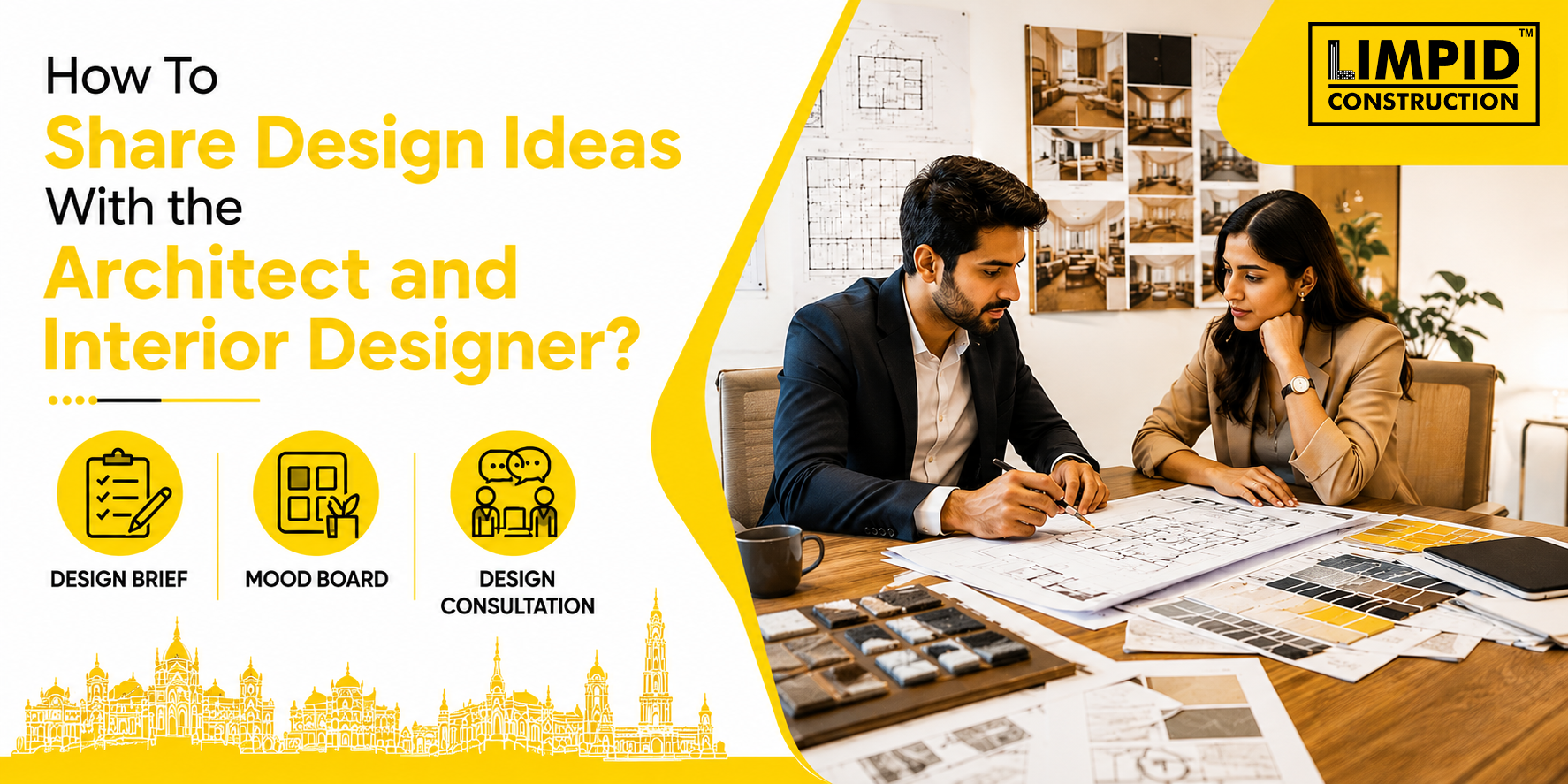
Sharing design ideas with an architect and interior designer works best when you use pictures and simple, real-life details about how you’ll use the space. Photos, mood boards, and phrases like “modern but cosy” already give them enough to start planning.
Most people hiring an architect and interior designer in Indore do not know design terms, and that’s fine. What really matters isn’t how perfect your idea sounds at the start. It’s how clearly you’re able to share it, even if it’s still a little rough around the edges.
Table of Contents
- How Can Homeowners Describe Style Preferences Without Technical Terms?
- What Visual References Help a Designer Understand a Client’s Taste?
- How Do Designers Turn Vague Preferences Like ‘Cosy’ Into a Design Plan?
- What Should a Client Bring to the First Design Consultation?
- How Does the Design Brief Process Uncover a Client’s Needs?
How Can Homeowners Describe Style Preferences Without Technical Terms?
Style can be explained without knowing a single design term. Words like “bright,” “calm,” “busy,” or “simple” say more to a trained eye than most people realise. A residential architect doesn’t need someone to say “Scandinavian minimalism” to understand the room they’re picturing. Describing a space the way it should feel, quiet in the mornings, easy to clean, good for hosting friends, gives just as much direction as any technical label would.
What Visual References Help a Designer Understand a Client’s Taste?
Photos say what words often can’t. A folder of saved images, magazine cutouts, or even screenshots from someone else’s home tour speaks louder than trying to explain a style out loud. A mood board works well for this exact reason. It doesn’t need to be neat or curated. A messy collection of “I like this, not sure why” images still gives a designer enough to work with.
A few things worth collecting before that first meeting are:
- Textures & Materials: Images of wood finishes, exposed brick, or anything that grabs your attention.
- Colour Patterns: Shades that keep showing up across different saved images.
- Dislikes: A photo or two of spaces, colours, or layouts that just don’t work for you.
- Saved Photos: Rooms or homes that felt right, even without knowing exactly why.
How Do Designers Turn Vague Preferences Like ‘Cosy’ Into a Design Plan?
“Cosy” might sound vague, but it gives a designer plenty to work with. Designers ask follow-up questions to unpack what that word actually means for someone specifically. One person’s cosy might mean dim lighting and a thick rug. Someone else means a small reading nook that doesn’t feel empty. That’s how a single word slowly turns into an actual plan, with real choices about materials, colours, and how the space is laid out.
What Should a Client Bring to the First Design Consultation?
A first design consultation goes a lot smoother with a little preparation. Bringing along saved photos, a rough budget range, and a list of non-negotiables (like needing a home office or extra storage) helps set the tone early. This is a topic worth reading more about.
For more on this, check out our post: What to Expect in the First Meeting With an Interior Designer
How Does the Design Brief Process Uncover a Client’s Needs?
A design brief is less a form and more a conversation, one that unfolds over several questions and walkthroughs rather than getting filled out in one sitting. Over time, it turns scattered preferences into something the design team can actually work from. A few things that tend to surface along the way:
- Room Usage: How the household actually moves through and uses each space, beyond just how it’s meant to look.
- Daily Routines: Things like a morning rush hour or a work-from-home setup that quietly shape how a layout needs to function.
- Future Plans: A growing family, a planned renovation, anything down the line that might change how the space needs to work later gets factored in now.
- Budget Priorities: Where the client is willing to compromise when preferences and budget don’t fully line up.
Start Designing Your Space With Us
You don’t need to know architecture or design terms to share what you want. Saying “I don’t know, but not that” is often enough to start with. A good architect and interior designer in Indore can take even that and shape it into something structured. That’s really what the process is for: turning a vague feeling into a home that works. Contact Limpid Construction to start that conversation.
Up next, we’ll walk through what to expect once the build itself gets underway.
Frequently Asked Questions
Is it necessary to have a fixed budget before the first design meeting?
A rough budget range is enough to start; an exact figure isn’t required upfront.
Can design preferences change after the project has already started?
Yes, adjustments are common, and most designers plan for some flexibility.
How long does the design brief process usually take to complete?
It varies by project, but most briefs take a few meetings to fully take shape.